
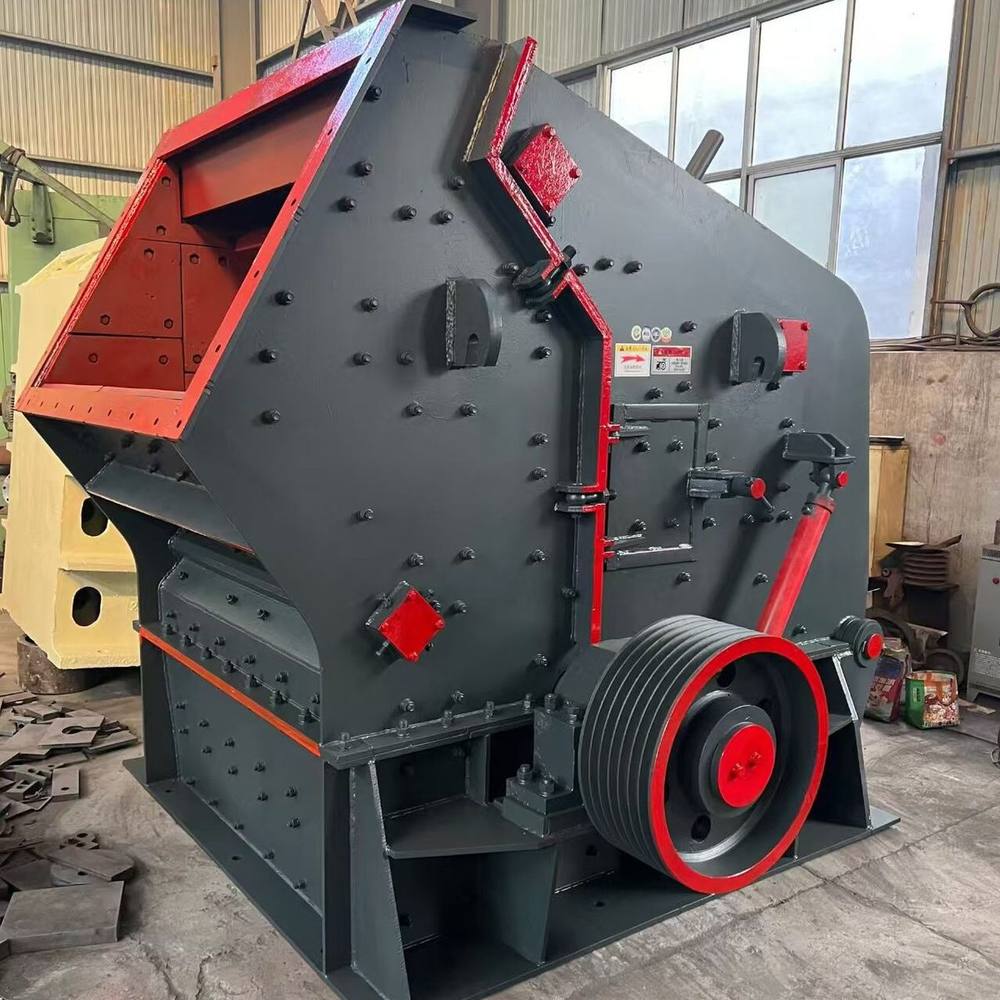
Impact Crushers
PF Impact Crusher
PF impact crusher with large crushing ratio, uniform cubic product and low energy consumption. Models F100-F152 with capacities up to 500 t/h for medium-hard rock.
PF impact crushers provide a high crushing ratio, uniform cubic product and low energy consumption for medium-hard rocks and recycled construction materials.
PF impact crusher with large crushing ratio, uniform cubic product and low energy consumption. Models F100-F152 with capacities up to 500 t/h for medium-hard rock.
Impact crushers use high-speed impact instead of compression, which gives excellent product shape and high reduction ratios at low operating cost - on the right material. They are the best choice for soft-to-medium rock and for producing cubical aggregate, but less suitable for very abrasive rock.
PF impact crushers suit limestone, dolomite, gypsum, coal, river pebble and medium-hard rock up to about 150 MPa. For granite or quartzite, a cone crusher is more economical; impact crushers on hard abrasive rock consume blow bars very fast.
Feed for most PF impactors is 100-500 mm. The rotor diameter and blow bar number set the reduction and capacity (typical 30-350 t/h). Ensure your primary stage already reduces feed to the impactor's maximum size.
Impact crushers give a high ratio (up to 30:1) and cubical product with low flakiness - ideal for concrete aggregate. Adjust the apron gap and rotor speed to tune product size; always run a screen after the impactor.
Blow bars and impact liners are the main wear items; choose high-chrome for abrasive feed or martensitic for a balance of cost and impact resistance. Keep a spare blow-bar set and check that liners interchange with your model.
Many plants use a jaw primary plus PF impactor as secondary for cubical aggregate, or run two impactors in closed circuit for high sand and aggregate output on limestone.
Impact crushers give better shape and higher reduction on soft-to-medium rock; cone crushers are better for hard, abrasive rock where wear cost is the deciding factor.
A PF-1214 typically accepts up to about 350 mm feed and produces roughly 90-180 t/h depending on rotor speed and apron settings.
In limestone, high-chrome blow bars commonly last weeks to months depending on feed; for abrasive rock life drops sharply, which is why impactors are not ideal for granite.
Yes, a VSI sand maker is the usual choice for manufactured sand; a PF impactor can also shape coarse aggregate in closed circuit with a screen.
Tell us your capacity and material requirements - we will recommend the best model and price within 24 hours.